
Our approach

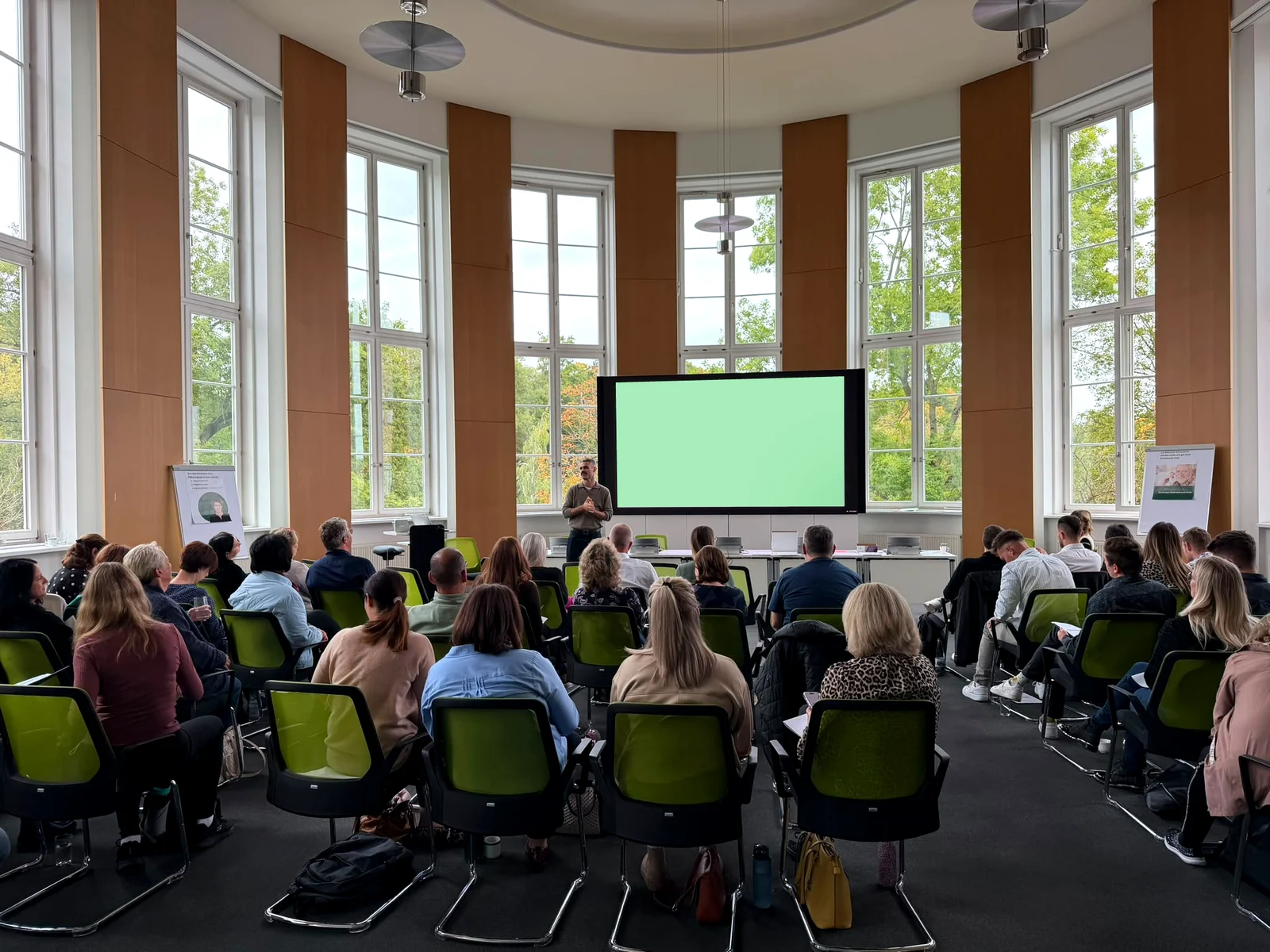
Our learning journeys follow six principles from learning and transfer research. They make sure leaders don't just understand new things but apply them in daily work, especially when working with AI.
Six learning principles

Not theory for its own sake: every principle is a concrete building block you will find in our programmes.

  1. 01

    Learn on your own case

    Every leader brings a real task: an upcoming conversation, a team workflow, a decision. That is what we practise on, in the tools you already have. The benefit shows from the first session.

    Use-case profile at the startExperiential learning (Kolb, 1984)Building blocks→
  2. 02

    Knowledge first, live time for practice

    The basics come as a short e-learning before the session. Shared time is reserved for what you can't do alone: trying things out, getting feedback, learning from each other.

    20 min e-learning before each sessionFlipped learning (Bergmann & Sams, 2012)See an e-learning→
  3. 03

    A learning sequence, not workshop yo-yo

    A seminar day motivates briefly, then daily work pulls everyone back. We spread learning over weeks: short units with application in between. Every session builds on what happened since the last.

    Modules every two weeksSpacing effect (Cepeda et al., 2008)The learning cycle→
  4. 04

    Practise in a safe space

    Difficult conversations are best rehearsed beforehand. Role plays with AI as the counterpart or in trios with an observer build confidence before it counts. Mistakes are explicitly welcome here.

    Role plays with AI and observationSimulation-based learning; psychological safety (Edmondson, 1999)Session flow→
  5. 05

    Learn from each other

    Fixed peer groups of 4–5 leaders create what no training can replace: trust, honest feedback and a network across departments. Seeing how colleagues use AI makes people try it themselves.

    Peer groups, 60 min, every two weeksSocial learning (Bandura, 1977); peer learning (Boud et al., 2014)More on peer groups→
  6. 06

    Concrete intentions

    Every session ends with an intention in the form “If …, then …”. The peer group knows it and a reminder follows. That is how a good idea becomes a new habit.

    If-then plan at the end of each sessionImplementation intentions (Gollwitzer, 1999)Learning transfer→
What leaders learn

We develop leaders on these three levels, and we measure impact on the same three levels.

Leaders use AI themselves, as role models: from chat as a Google substitute to a personal assistant and sparring partner that knows their role, team and leadership style.

What we teach

  • AI as an assistant for email, meetings and calendar
  • AI as a sparring partner to prepare difficult conversations and decisions
  • Analysing data and creating presentations in your own tone
  • Using AI responsibly: checking results, data protection, knowing the limits
  • Personal AI rituals instead of occasional experiments

Typical tools and results

Personal assistant in CopilotFeedback coachPrompt library

Why: Without your own practice, credibility is missing.

How projects run

Every project starts with listening and ends with numbers. In between, we tailor the journey to your roles, tools and cases.

01 from 6 weeks before start

Goals & baseline

Goal: Clarify the starting point, target picture and success criteria together.

ResultBaseline report and target picture
Baseline measurement→

What we do

  • 6–8 interviews with leaders, HR and sponsors
  • Analysis of strategy, leadership model and employee survey
  • Baseline: 5-minute maturity check per leader, report within 72 hours
  • Early alignment with works council, data protection and IT

02 2–4 weeks before start

Design & preparation

Goal: Tailor the journey to your roles, tools and cases.

ResultA tailored learning journey
Building blocks→

What we do

  • Detailed design of all modules with cases from your daily work
  • Exercises directly in your AI tools, such as Microsoft Copilot
  • Coach calibration and dry run
  • Invitation on behalf of management, briefing for line managers

03 6–12 weeks

Journey & transfer

Goal: Enable leaders on their own tasks, with transfer from week one.

ResultTools and use cases in daily work
See a module→

What we do

  • E-learnings, online sessions and, depending on the programme, an on-site workshop
  • Fixed peer groups of 4–5 leaders
  • Fine-tuning after every session based on feedback
  • Mid-point review with HR

04 up to 90 days after

Impact & embedding

Goal: Prove impact against the baseline and embed it in the organisation.

ResultImpact report and playbook
Learning transfer→

What we do

  • Follow-up measurement on the same grid
  • Impact report on three levels and management readout (60 min)
  • Playbook and templates for teams
  • Enabling internal multipliers such as AI champions
FAQ

All questions at a glance→

Traditional leadership training is no longer enough because AI is changing what is expected of leaders. Leaders need to use AI confidently themselves, give their team a clear framework and align use cases with customers and the business. Most training does not cover this yet, and pure AI training leaves out the leadership dimension.

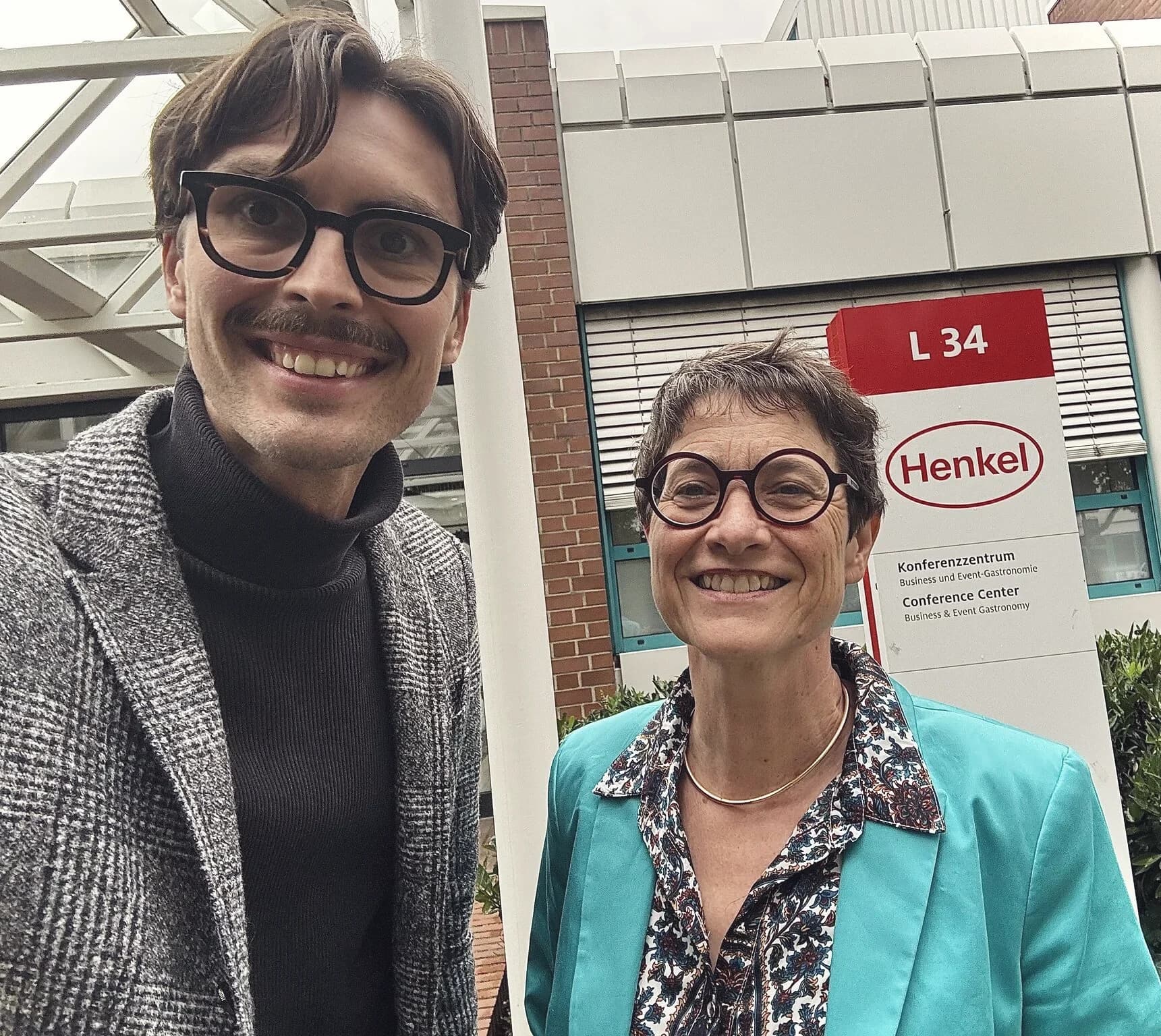
In a 25-minute intro call, I'll show you how our programmes can be tailored to your goals, your culture and your AI tools.

Marius Hepp Kemper, Managing Director of Junto

Marius Hepp Kemper

Managing Director

  • ✓Insight into content and formats
  • ✓Free & no obligation
  • ✓25 min via MS Teams

Intro call · 25 min

Pick a time right here

Opening loads the calendar from Calendly.